Your AARP
AARP HELPS YOU BUILD A HEALTHY BRAIN
It comes down to six habits you can follow every day
Staying mentally sharp is a top concern of AARP members. In the latest member opinion survey, 77 percent were extremely or very concerned about it, close behind worries over consumer fraud and the future availability of Social Security and Medicare.
Is there a secret to staying mentally sharp? Decades of research have revealed several ways to tilt the odds in your cognitive favor. Much of it comes down to lifestyle: Eat a healthy diet, exercise regularly, manage stress, sleep well, socialize and keep learning. Known as the six pillars of brain health, these practices are the foundation of AARP’s Staying Sharp program. They’ve also been shown to support overall health.
The trick is to turn those activities into consistent habits—learned behaviors that you’ve repeated so many times they’ve become automatic and often unconscious. Fastening your seat belt, making the morning coffee, even reaching for your smartphone every time it dings.
“Habits are the infrastructure of what we do every day,” says behavioral scientist Wendy Wood, professor emerita at the University of Southern California. “If you always had to think about So where exactly is my toothbrush and how do I put toothpaste on it? we wouldn’t get very far. Habits just streamline all that and make our lives easier.”
Staying Sharp’s new challenge, Building Healthy Habits, helps you learn how habits are formed, why some stick and how to design brain-healthy routines that work for you.
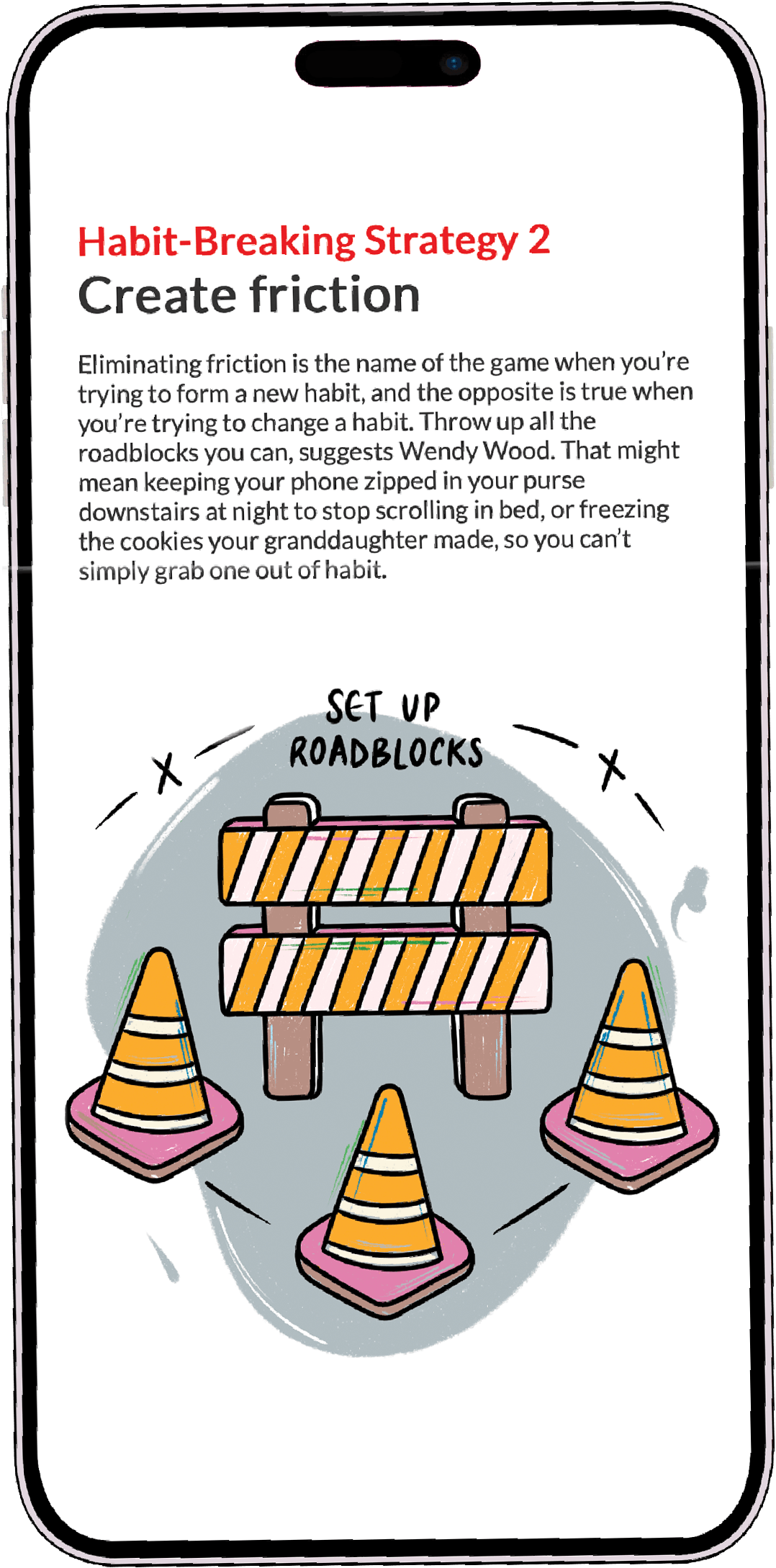
Instead of making major lifestyle changes all at once, the idea is to focus on small, practical actions you can repeat day after day. Wood is also a big believer in the power of friction. Want to break a bad habit? Amp up the friction. Put your phone in another room if you want to avoid using it once you climb into bed. That’s creating friction against the habit. Want to start walking in the morning? Set out your sneakers and workout clothes the night before. You’ve reduced the friction.
The Building Healthy Habits challenge walks users through these steps: the cue that prompts a behavior, the behavior itself and the reward you get as a result. With enough repetition, the behavior becomes a habit.
This challenge includes writing prompts, tips for success and advice from Wood and other researchers who study behavior change. Visit stayingsharp.org to sign up for the challenge for free.
At that website, users can take a cognitive assessment, try quizzes and even play games. AARP members get access to extras, like recipes with videos, inspirational TED Talks and a library of activities. And it works. A recent study showed the longer people were enrolled in Staying Sharp, the more likely they were to report better sleep as well as healthier eating and overall habits.
Cori Vanchieri is AARP’s brain health editor.