In the News Special Report
WHAT MOVES VOTERS?
Social Security, caregiving and the economy are vital issues for older Americans
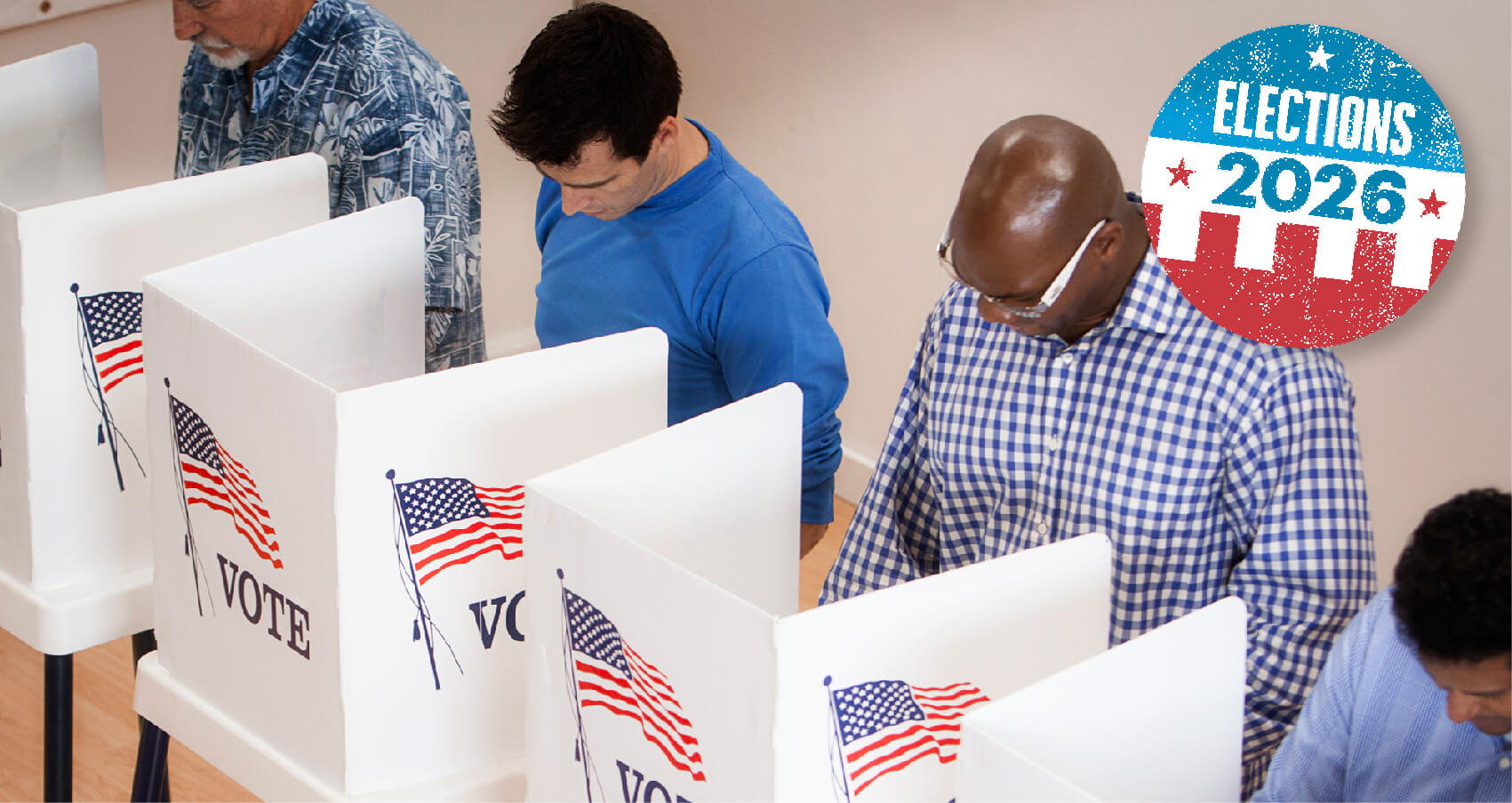
Greg Howell turned 18 just in time. He was a freshman at East Carolina University, and his birthday had been on Oct. 20, 1972. Eighteen days later, he voted in the presidential election of 1972—the first time 18-year-olds across the country could do so. And he’s been casting his vote ever since. Today, his is a steadfast voice in the most loyal and consistent voting bloc in the country: those age 65 and over. As the nation moves to yet another vital election, older voters will play a disproportionate role, ensuring that Social Security, Medicare, caregiving and other issues of importance to them will be front and center.
“Our generation has always been pretty good about making our priorities known on the issues that affect us,” says Howell, 71, who lives near Asheville, North Carolina.
In every national election since 2002—when citizen voting data by age became available—those 65 and older have cast ballots at higher rates than their younger counterparts. In fact, in 2024, their voting rates inched up very slightly from the previous presidential election, while those of other groups dropped, according to survey data from the U.S. Census Bureau. For midterm elections like this year’s, the gap between older voters and younger ones is even bigger. In 2022, the difference was a yawning gap—66.8 percent of citizens 65-plus voted, compared with 27.6 percent of those 18 to 24.
The larger size of the over-50 demographic, coupled with its higher voting rates, means the group plays a major role in shaping the direction of the country.
AARP will help keep that voting bloc well informed. While the organization is nonpartisan and doesn’t endorse candidates or contribute money to campaigns, it has a presence in every state to make sure candidates address issues of importance to those age 50-plus. This year, that means Social Security, family caregiving and health care, among other topics. “Our job is to bring these issues to the attention of the candidates and to bring what candidates say to the attention of our members,” says Nancy LeaMond, AARP executive vice president and chief advocacy and engagement officer.
‘THE ECONOMY DRIVES EVERYTHING’
So what’s on the minds of older voters?
Asked to name the “biggest issue facing the country today,” voters in a December 2025 AARP poll pointed to “cost of living.” Related issues such as health care, taxes, jobs and Social Security and Medicare also registered as concerning. Older voters were actually less pessimistic on the economy than younger ones—but it still ranked as their top concern.
Asked whether they felt more or less financially secure than they had a year earlier, more people in every age group reported feeling “much less” or “somewhat less” secure than the number who felt “much more” or “somewhat more” secure. Among those 65-plus, the results in the AARP poll were 39 percent less secure, 26 percent more.
Not just pocketbooks are at play in this election, of course. “Threats to democracy,” “political division” and “immigration” were top issues for both old and young, and older voters gave greater weight to those concerns than younger ones. Still, “the economy drives everything,” says John Hishta, AARP senior vice president of campaigns. From the cost of groceries to utilities, housing and prescription drugs, paying bills is a major concern.
“People don’t think that they’re doing well right now, for the most part,” Hishta adds.
For Lillian Lee, 75, a retired elementary school principal and AARP volunteer, such feelings help motivate her political participation. “I know I’ll never be a billionaire, but I do want to make sure that I am comfortable—that I don’t have to worry about having enough money to pay the bills or buy groceries,” says the Raleigh, North Carolina, resident.
Chris Adams is AARP’s state news editor.
SOCIAL SECURITY CHIEF: ‘WE ARE WORKING TO SERVE YOU FASTER’
Since taking office in May 2025, Frank Bisignano, commissioner of the Social Security Administration (SSA), has vowed to put the agency on a “digital-first” footing that shifts more of its business online while preserving customers’ access to services by phone or in person.
In an interview at AARP’s national office in Washington, D.C., in February, he promised to do that while “100 percent” keeping the agency’s 1,200-plus local offices open.
“It’s really about being a digital-first agency but meeting clients where they want to be met,” said Bisignano, who also addressed the SSA’s efforts to reduce fraud and the disability claims backlog.
Bisignano said phone wait times have already been cut significantly, as have wait times for in-person appointments at field offices.
As for the future of those field offices: “We can’t foresee closing a field office. It’s a place where people go,” he said. “We have a very large obligation to be available all the time for the American public.”
Go to aarp.org/bisignano to listen to the full interview.