COVER STORY
BEATEN BY THE ODDS
With new forms of gambling booming in America, some retirees are going bust
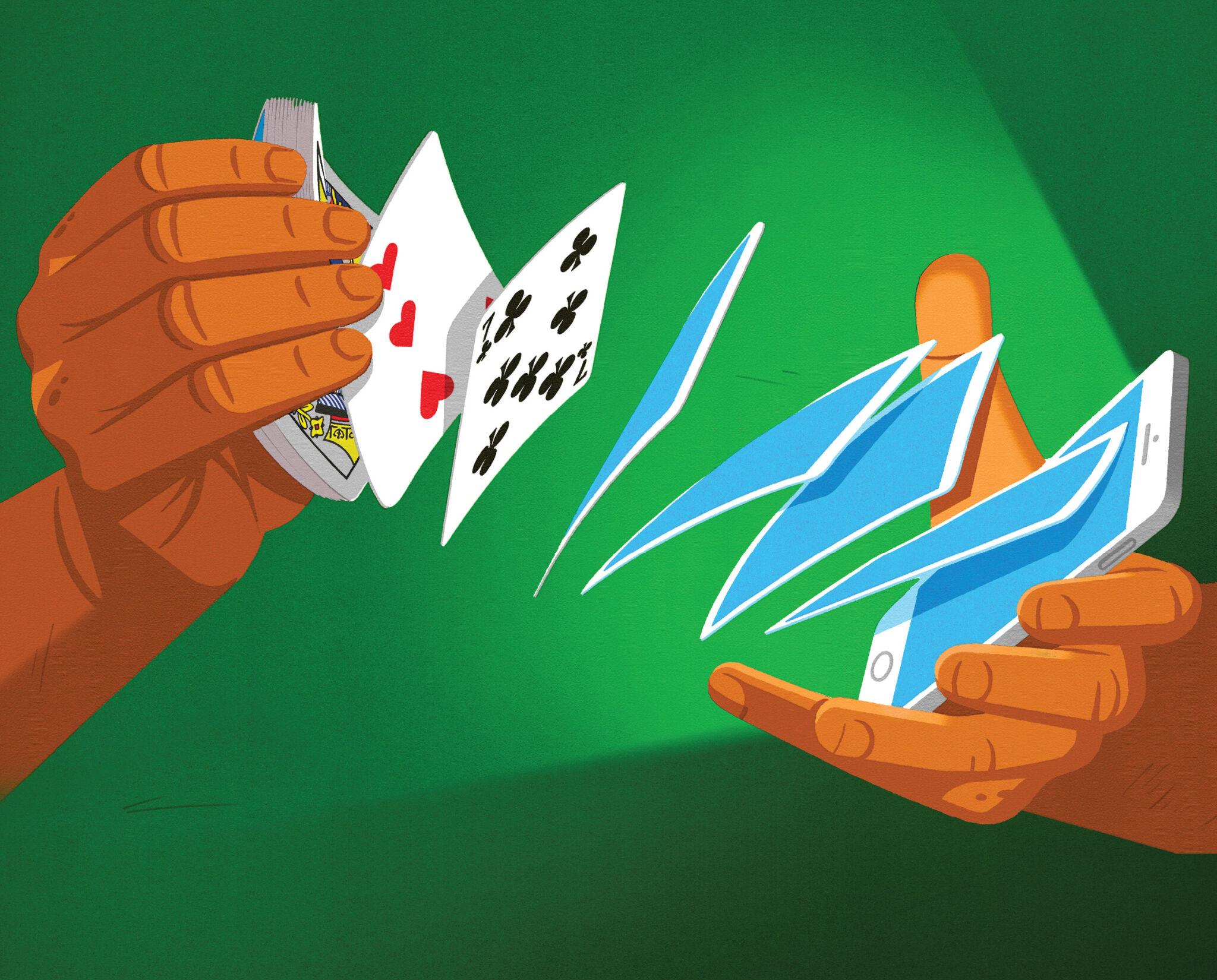
Jack F. had played the slots on trips to Atlantic City with his wife for years but never had a problem gambling—until he tried it online.
“I didn’t get into it at the casinos,” says Jack, 81, who asked that his full name not be used because he is in a recovery program for problem gamblers that stresses anonymity. “Then I discovered the iPhone. How wonderful the iPhone is! You can sit in your living room or bathroom and gamble away.”
That was only a few years ago. Jack was happily retired from his job as a battalion chief with the Jersey City Fire Department. He lived in Clark, New Jersey, with his wife, a retired hairdresser. Their 56-year-old daughter lived downstairs in a basement apartment. They had three other adult kids and seven grandkids. Their house was paid off. His pension, her Social Security and their savings easily covered their monthly bills. Life was good, comfortable.
That all changed when, out of boredom, he started gambling on his phone at night. After his wife and daughter had gone to bed, he’d sit by himself in his recliner in the family room and play Wheel of Fortune, Monopoly and slots on the Borgata Casino app he’d downloaded. Soon he was doing that five nights a week, the hours slipping by two or three at a time—staying up sometimes as late as 2 in the morning—and racking up losses of as much as $5,000 a night. It was far more than he could afford on their fixed budget. “I can’t believe I did what I did, how late in my life I got into this,” he says. “It happened so quickly. It’s just so easy to get hooked.”
A COURT RULING FUELS AN INDUSTRY
In the wake of the 2018 U.S. Supreme Court decision that opened the door for legalized sports betting, a lot of media has focused on young men getting hooked on internet gambling. But very little attention has been paid to the ways older Americans are vulnerable to developing online gambling problems. The user-friendliness of apps that transform computers, tablets and smartphones into portable casinos, combined with the opportunity to play continuously, has almost doubled the amount Americans have wagered over the past five years. That has driven the rise in gambling problems nationwide, notably in people age 50 and older.
“You can make the argument that the generation that is most susceptible for developing gambling as a problematic behavior are boomers,” said Don Feeney, research and planning director for the Minnesota state lottery, in the Nebraska Public Media documentary Growing Old Gambling. “When I started looking at the risk factors for gambling addiction, they seemed to me to be concentrated in boomers: isolation, the sense of guilt, stigma, forbidden fruit.”
Deceptive features in game design, custom-tailored marketing and seemingly ubiquitous advertising are inducing people to gamble longer and lose more money than they intended. “Often older people who develop gambling problems have been fine gambling recreationally most of their lives, but as we get older, we’re subject to more stressors related to health, we start to lose loved ones,” says Ted Hartwell, former director of storytelling at the Nevada Council on Problem Gambling. “That can lead to behavior like gambling becoming a way of escape, to numb some of that physical or emotional pain.”
Indeed, experts say online gambling operators view people over 65 as a desirable market and target them with their advertisements and promotions. “They go after the seniors,” says Gary Schneider, 71, a recovering gambling addict. “Online casinos know exactly who they’re talking to. A senior that’s lonely gets a call from a concierge and has someone to talk to. It’s a con game.”
The consequences can be devastating for those who are retired, on fixed incomes and with no means to recoup losses once their savings accounts are wiped out. And there are worrisome signs the problem is growing. The Connecticut Council on Problem Gambling reports that 1 in 9 of the organization’s helpline calls come from someone age 55 or older. In Nevada the number is even higher; of callers seeking direct assistance from the state’s helpline, 1 in 3 are 50 or older. At the Dr. Robert Hunter International Problem Gambling Center in Las Vegas, the oldest in the country and one of the largest, approximately 35 to 40 percent of the clients are over 50 years of age. Even these numbers may not represent the full extent of the problem because, as noted in the journal Frontiers in Psychiatry, “very few older people with a gambling disorder will seek access to specific treatment programs.”
A SHOCKING CHARGE
The recent arrest of Karl Jacobson, 56, the former police chief of New Haven, Connecticut, illustrates the potential harm of problem gambling. Jacobson was charged with stealing more than $80,000 from police accounts to cover losses from gambling on the sports betting apps DraftKings and FanDuel. Jacobson initially won substantial amounts on his bets, according to court documents. But he wagered $4.46 million and eventually incurred a net loss of $214,365. In late February, he was charged with embezzling to cover his gambling expenses. “I have a problem,” he told investigators, according to a state police affidavit. “I turned to gambling.”
In an interview, Jacobson’s attorney Gregory Cerritelli stressed that his client had not yet been convicted of any crime but called phone-based gambling “dangerous,” adding, “For people who struggle with a gambling addiction, it’s like an alcoholic having a bottle of scotch in their hand and trying not to drink.” Cerritelli says his client’s story “is a cautionary tale: This can happen to any one of us.”
Since the 2018 Supreme Court ruling, 32 states and the District of Columbia have allowed online sports betting on everything from the Super Bowl to Ping-Pong.
“I have a problem,” said police chief Karl Jacobson, who was charged with embezzling funds to pay for online gaming. “I turned to gambling.”
Many people also gamble in online casinos. Right now, they can do that legally in only seven states (Connecticut, Delaware, Michigan, New Jersey, Pennsylvania, Rhode Island and West Virginia), but online casino gambling is widespread throughout the country, with illegal sites advertising openly and allowing access from anywhere. When asked if people in Minnesota—where online casino gambling is not legal—were gambling online, Susan Sheridan Tucker, executive director of the Minnesota Alliance on Problem Gambling, said, “It doesn’t matter whether the sites are illegal or not. People are still gambling online. If we’re interested in reducing gambling harms, all types of gambling must be regulated.”
According to a 2025 study of online casino advertising trends published by the American Gaming Association, offshore and sweepstakes operators such as Chumba Casino, Pulsz and McLuck are focusing their advertising in states like California, Texas and Florida, which have the highest number of residents age 65 and older.
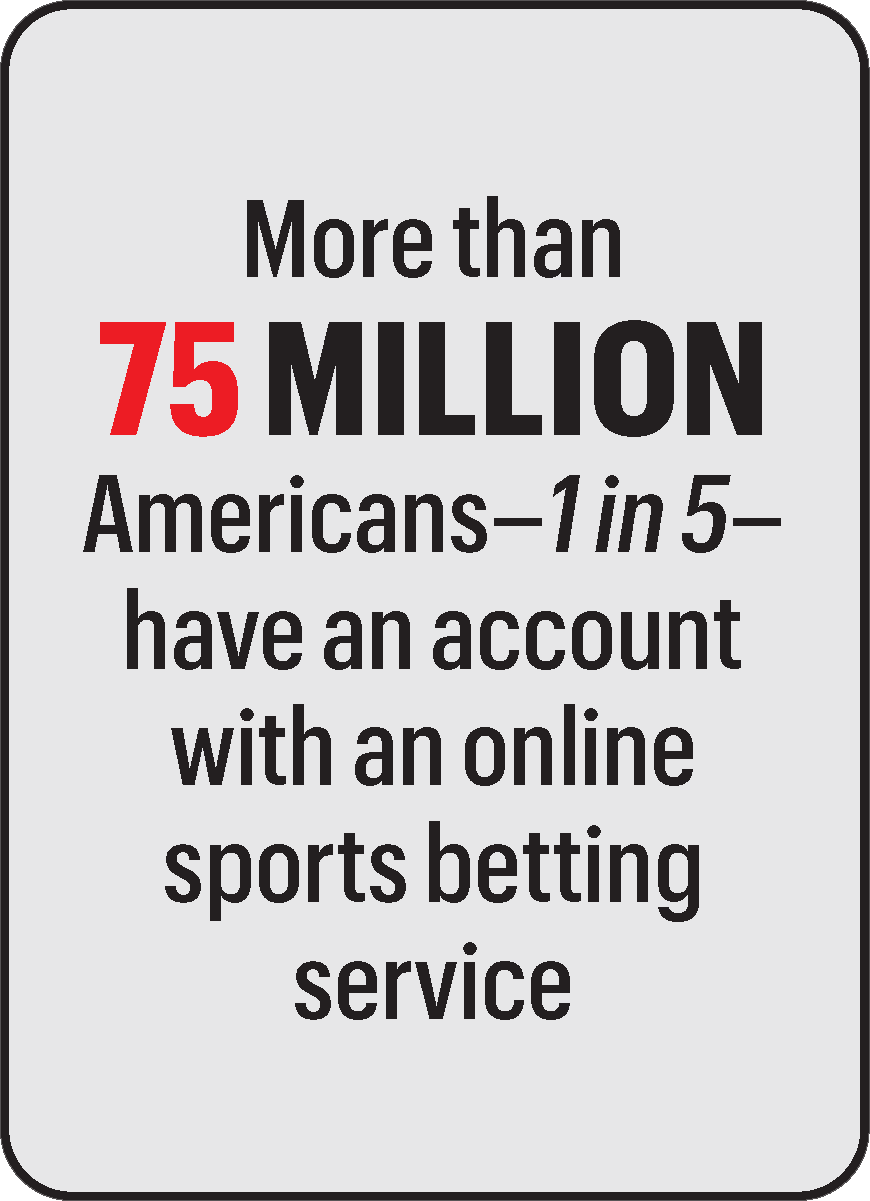
Over 75 million Americans—more than 1 in 5—now have an account with an online sports betting service, and most of them use an app on their smartphone to place their bets, according to a 2025 national survey by researchers at Siena College Research Institute and St. Bonaventure University. Much of the $700 billion placed in bets last year was wagered online, and not just on sports. Online and app-based casino and sports betting products are the fastest-growing sectors in the gambling industry worldwide, Polaris Market Research found.
COVID WAS A CATALYST
Online gambling became especially popular with older Americans during the COVID-19 pandemic, when lockdowns restricted trips to the casino and people were looking for ways to fill their time. A review of betting data by England’s Royal College of Psychiatrists showed that online gambling during the pandemic increased more for people over 65 than it did for any other age group. A Glasgow study revealed that people approaching retirement age (those 55 to 64) had the highest rates of participating in gambling activities, but gamblers 65 and over participated more frequently; more than 50 percent of those who gambled did so weekly.
The United States lags behind Australia and Europe in its gambling research, in part because of the influence the industry has on funding and how studies are conducted in America, critics say. “There is clear evidence that research related to the effects of gambling in America has been skewed by casino interests in ways that highlight arguments for gambling expansion and suppress evidence of gambling harms, following the model of tobacco interests,” says Jonathan Krutz, emeritus marketing professor at Boise State University and president of the Stop Predatory Gambling board.
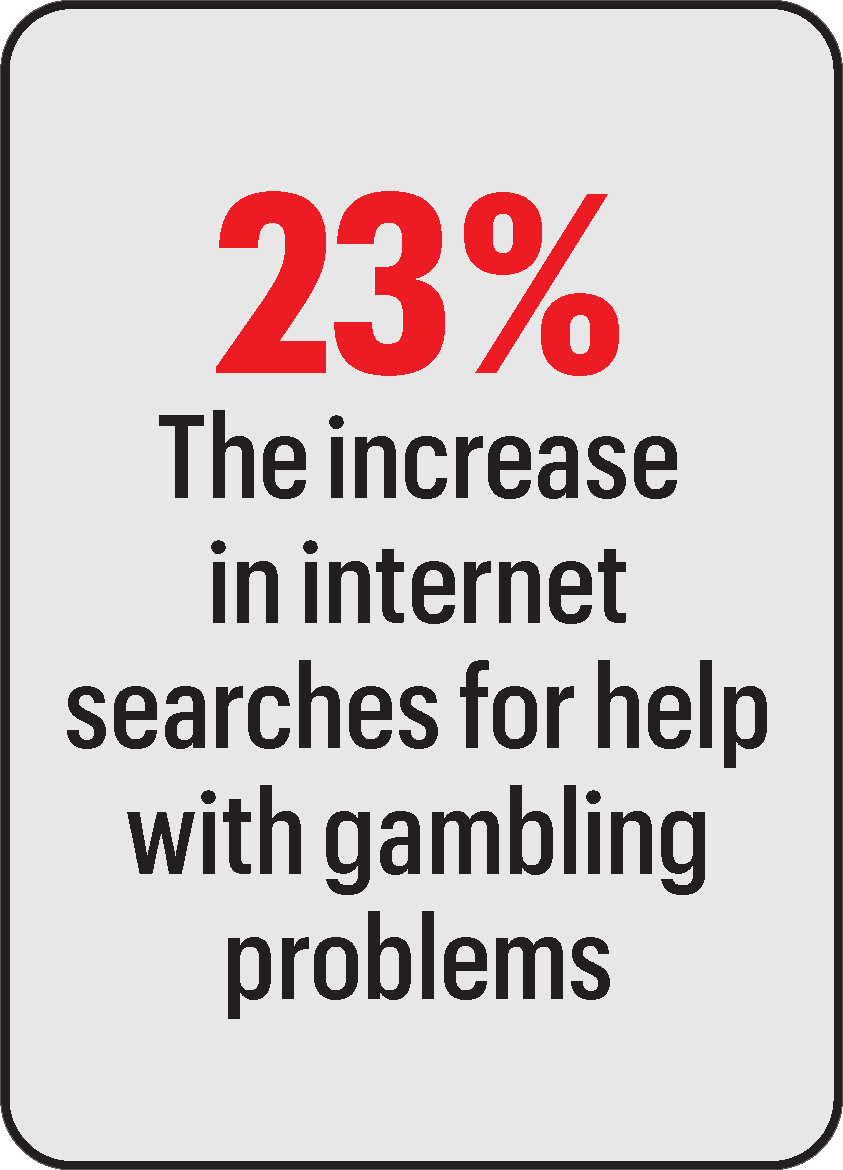
But the problem is well understood by experts. The National Council on Problem Gambling estimated that the risk of gambling addiction grew by 30 percent from 2018 to 2021. One study published in JAMA in February 2025 reported a 23 percent nationwide increase in internet searches for help with gambling problems. Since Pennsylvania legalized online casino gambling in 2017, the number one reason people cite for calling the state’s gambling hotline for help is online casino games.
Jimmy C., 64, who is also in a recovery program for problem gamblers, says he is one of those who found out the hard way that online gambling can be more seductive than traditional forms of wagering. The New Jersey native is a lifelong gambler; he started betting in card games at age 12, on football games at 14 and in casinos as soon as he was old enough to frequent them. He got into financial trouble gambling as a young adult, but by working mountains of overtime at two jobs, he was able to cover his losses.
Once he started betting online, however, his compulsive gambling intensified and his troubles accelerated. He opened accounts on four different apps, betting on sports and playing slots, and wagered far beyond his means. One year he gambled more than $250,000 through a single online account. He seemed to play endlessly—driving in the car, during bathroom breaks at work, on the toilet in the middle of the night. He even set his phone on autoplay while taking a shower, losing $500. He rigged the TV monitors at one of his jobs, where he was supposed to be surveilling traffic conditions, to show four football games he had placed bets on. He blames the easy accessibility of his phone: It was always there, always available to take another bet. “As long as we’re awake and breathing, a compulsive gambler usually will engage in some activity as long as they have access,” he says.
The American Psychiatric Association classifies gambling addiction in its Diagnostic and Statistical Manual of Mental Disorders (DSM-5) as a disorder on par with substance use disorder. Indeed, gambling activates the brain’s reward systems similarly to how alcohol, cocaine, opioids and other drugs do. Those who develop a gambling disorder continue to bet despite symptoms such as a preoccupation with gambling, the inability to control their betting behavior, feeling the need to chase losses and gambling to escape problems.
DEEPENING SELF-DECEPTION
When retired firefighter Jack F. downloaded the Borgata app on his phone, it asked for a credit card number, which he provided. He did not have to feed his gambling device with coins, as he once did with slot machines, or replenish a user card with purchased credits, the way it’s done now in physical casinos. The app simply charged his credit card. That sometimes made it hard to track whether he was up or down, though he was usually down. In fact, he was losing more money than he realized. “Sometimes you think maybe it’s not real money you’re playing with because you’re on the phone,” he says. “You don’t even realize that you’re betting, and it’s not really affecting you until you get your credit card bill, and you say, ‘Oh, my God, what did I do?’ ”
Jack’s credit card debt kept mounting. He hid his gambling from his wife out of shame and embarrassment over his losses. He paid down his credit card balance with another credit card. But the balance on that one mounted too. He got a third card to pay down the balance on the first two. But the debt kept mounting and the minimum payments became too much. He overdrew his bank account. He borrowed money from his credit union. He tapped into a home equity loan for $17,000. “It was craziness, trying to get the money together and conniving about where I could get it,” he says. “It was always in the back of my head: How do I get more money? And that was the only thing I could think about, trying to find sources to pay for the gambling.”
His wife, Mary Ann, found out about the loan and confronted him. He promised to stop. But within a few weeks, he was back on his iPhone, gambling late at night.
SEDUCTIVE LURES
Gambling online may carry a greater risk than gambling at a casino because of features built into the apps. Some let users make bets continuously, as often as every three seconds. That continuous action—whether it’s placing a bet on if a pitcher will throw a strike or simply pushing a button—does not allow for a reflective pause, when a gambler might realize it’s time to take a break, and is known to induce riskier behavior more likely to lead to gambling problems. Some apps have an automatic betting feature, where “you can tell it to continually gamble for you,” says Krutz. “So you hit the button once and then it bets over and over and over and over and over again, and you just watch.… You may be sucked into that, and you may empty your account very quickly. We’re talking $1,200 an hour [making a $1 bet every three seconds], and you can do it for 24 hours a day, seven days a week.”
Using a credit card can be especially risky because it allows people to gamble with money they may not have. But any form of digital expenditure seems to carry greater risk than using actual money. “Many report being surprised by how much they bet when they look at their betting statements later on,” says Nerilee Hing, a research professor of gambling studies at Central Queensland University in Australia. “It’s very easy to lose track of expenditures. You can’t see your physical cash dwindle away, your wallet empty or yourself having to withdraw more cash from an ATM. You just keep tapping away on your phone.”
Gambling apps, just like electronic gaming machines (or slots) found in brick-and-mortar casinos, are designed to maximize the time someone is playing and, in turn, maximize the amount the person is betting. That ultimately maximizes the amount the person is losing because, given the odds, the longer someone plays, the greater the probability they lose.
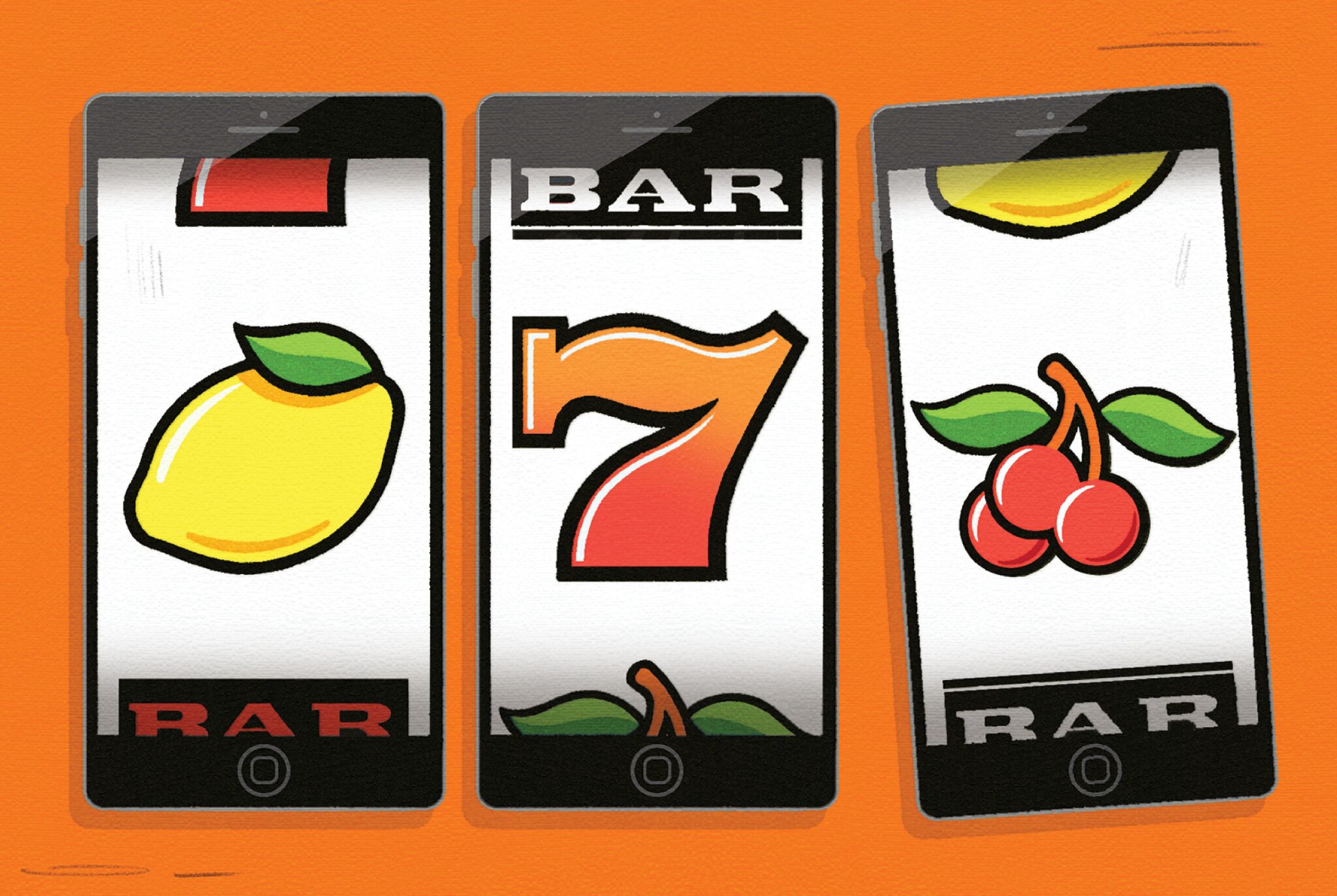
There are elements of the apps’ design that can deceive and manipulate users. These include near misses. Say you’re playing a game with three spinning reels and the first and second show a cherry on the winning line, but the third shows a cherry just above the winning line. That’s a near miss. Though this is all virtual, it appears you almost won, and neurological research has shown such near misses trigger the same response in the brain as a win. Losses disguised as a win can do the same. Say you bet $5 and win $2. The app flashes all the sounds and images associated with a win, which can register in the brain as a win when you have actually lost $3.
Hing and other researchers have found that these practices can deceive gamblers, inducing them to play longer and lose more money than intended. Richard Daynard, a legal scholar, president of Northeastern University School of Law’s Public Health Advocacy Institute and pioneer of strategic litigation against the tobacco industry, charges that online gambling companies are doing what tobacco companies did with cigarettes: engineering their products to be addictive. “If you want to compare it with cigarettes,” he says, “these are both designed as traps. Designed to trap people into addiction. Online betting is designed to be addictive.”
GAMING PUSHED AGGRESSIVELY
Gambling apps are being marketed relentlessly, critics say. Television broadcasts of sporting events are saturated with the logos of online bookies like FanDuel and DraftKings, commercials featuring star athletes promoting gambling and commentators bantering about betting odds. Elsewhere, slick and pervasive ads promise “free bets” and say you can “win big.” Americans 50 and older are encouraged to get in on the gambling game. Some ads target older adults with offers for freebies, discounts and even medication coupons. One TV spot has Yankees legend Derek Jeter, 51, walking in front of a highlight reel of some of his best plays and saying, “You never know when a play will become legendary. When the moment comes, will you be ready?” He flashes a phone showing the BetMGM logo while a voiceover intones, “Make it a season you’ll never forget when you bet on baseball.”
Another TV ad supposedly portrays the wisdom and influence that come with age: An older bartender teaches a younger patron to “pass the leg,” a FanDuel feature that allows multiple people to share a parlay bet. In a montage of scenes, various people repeat the phrase, including an older adult at a Thanksgiving dinner where everyone is on their phones. The tagline? “Bet together like never before.”
“Online gambling companies precisely target consumers using predictive algorithms, personalization, and persuasive technologies and train sophisticated algorithms to enhance an individual’s user experience.”
—Lancet Public Health Commission on Gambling
A static ad for an online casino makes it seem oh so simple to win money with gambling apps. It depicts a woman clearly over 50—phone in hand, wearing a happily surprised expression—and bears the caption, “If you love casino games, Chumba Casino is free to play, and you can win cash prizes.”
Unsurprisingly, a 2019 study by Hing found that frequent exposure to gambling advertisements and inducements on digital platforms encouraged higher betting frequency, larger amounts wagered, more impulsive play and riskier bets with longer odds.
The apps collect reams of data on the people using them, enabling online gambling companies to laser-focus their marketing efforts. Knowing how and when someone bets, what they bet on and how much they bet enables these companies to tailor offers and other inducements to encourage more gambling. In November 2024, the Lancet Public Health Commission on Gambling reported, “Online gambling companies precisely target consumers using predictive algorithms, personalization, and persuasive technologies and train sophisticated algorithms to enhance an individual’s user experience.”
A SPRAWLING MARKETPLACE
The gambling industry invested $472 million over a 12-month period to encourage responsible gambling, fund research and provide support services for problem gamblers, reported the American Gaming Association, which promotes and lobbies on behalf of the industry, in September 2024. The concern, critics contend, is that the industry frames problem gambling as an issue that rests with the individual who develops the gambling addiction, rather than accepting responsibility for the way product design and marketing efforts exacerbate or even cause problems.
The first comprehensive legislation to address these issues at the federal level has been proposed. The SAFE Bet Act would place severe restrictions on advertising, prohibit AI from tracking users and creating individualized offers and promotions, and stop betting during college or amateur sports games. But it has not gained traction in Congress. At the state level, no government has passed meaningful reforms with similar measures. Perhaps that’s because states have come to rely on the money they get from the gambling industry as part of their annual budgets.
In 2024, the gambling industry paid $15.91 billion in taxes on commercial gaming to state and local governments. Those governments deeply depend on those revenues, the Lancet commission observed.
GETTING HELP
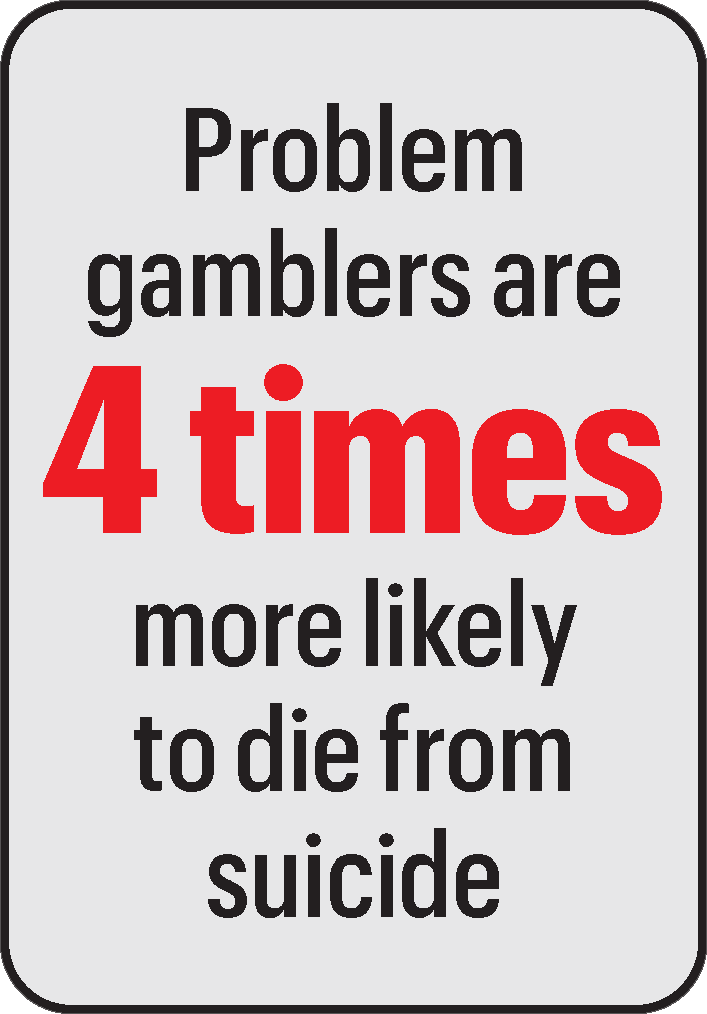
The shame and remorse over gambling losses can lead to some dark places. A Swedish study published last year found that problem gamblers were four times more likely to die from suicide than the general population. (If you are having thoughts of suicide, please call the Suicide & Crisis Lifeline at 988 to talk with someone.)
Jack eventually racked up a debt of about $60,000, far more than his firefighter pension could cover. He was constantly on edge, scrambling to cover his losses, sweating over his wife’s scrutiny, telling himself, I won’t get caught. His daughter Deanna, who lived downstairs, overheard her parents arguing about his gambling. She also confronted Jack about it. “You need help,” she told him. “You’re out of control.”
When Jack reached the point where he was desperate to get control of his online gambling, he entered a 12-step Gamblers Anonymous program. He says he hasn’t placed a bet since Dec. 7, 2024. He even put himself on New Jersey’s exclusion list, which blocked him from using the gambling apps on his phone or visiting a casino in the state.
He attends therapy sessions once every three weeks at a local Veterans Affairs center. And he continues to attend weekly meetings of his recovery group.
“Walking into that room to this day makes me feel so much better about what had been transpiring over the past couple years,” he says. “And the people in it, they share their problems, their issues, and we work things out together. We’re there for each other. It’s really just comforting knowing that you’re not alone.”
John Rosengren is an award-winning journalist based in Minnesota.
They Won’t Let You Quit
Feel compelled to continue playing digital gambling games? That’s no accident
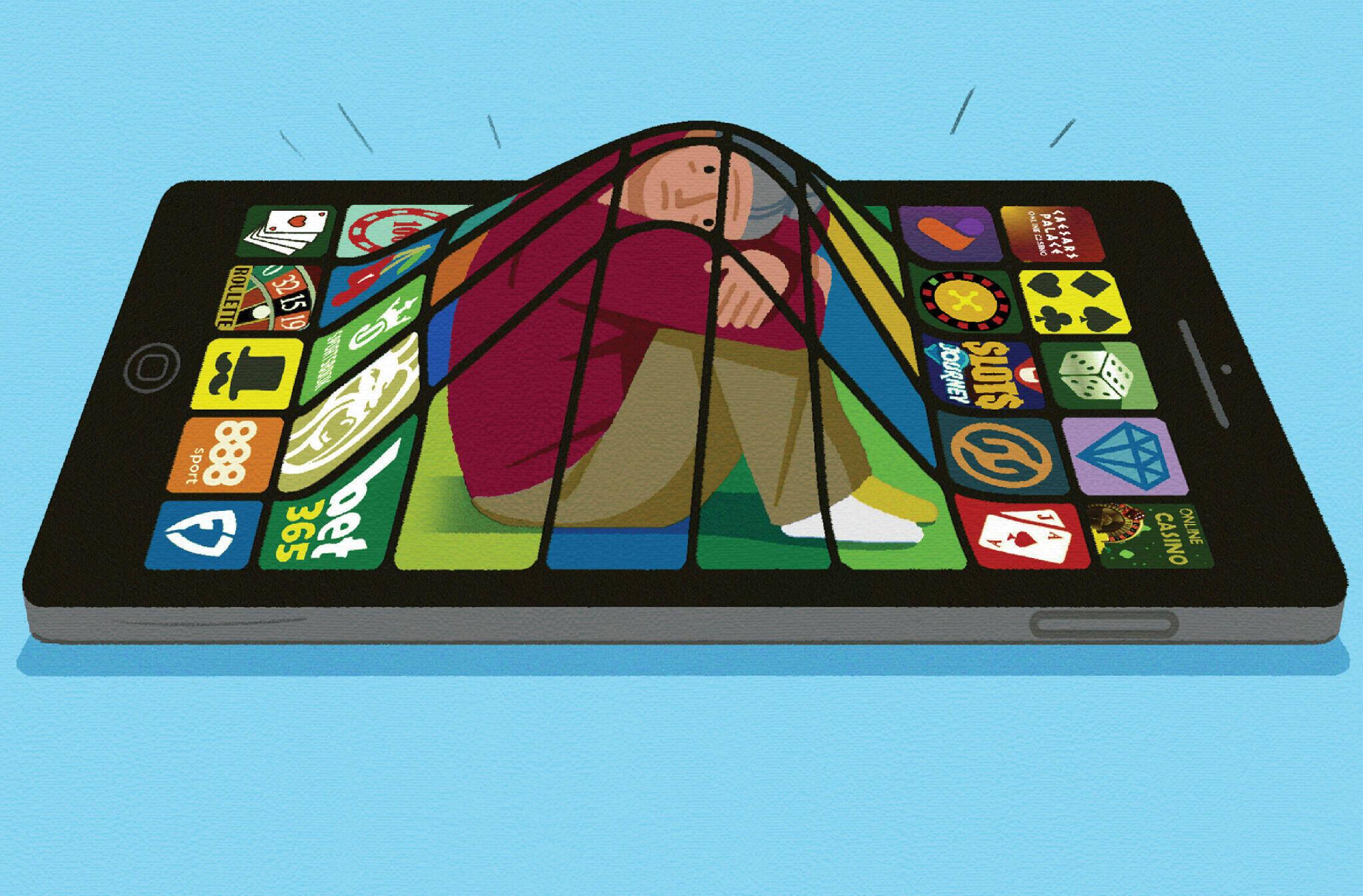
Online gambling operators collect troves of data on customers that allow them to precision-target their marketing and promotions. And when activity lags, they can use that data to lure players back.
“They don’t want you to quit,” says Richard Daynard, law professor and president of the Public Health Advocacy Institute at Northeastern University School of Law. “If they see you lagging, they will make an offer to pull you back. They know exactly what your profile is and how to get you to place the next bet.” Sometimes those offers come from a personal host assigned to VIP gamblers. Hosts are trained to spot addictive patterns and tendencies in players’ gambling, ostensibly to help them take a break or quit if they need to, but that training and the data collected can also be used against a customer’s best interests, Daynard says.
“It’s a competitive market, right?” says Jonathan Krutz, president of the Stop Predatory Gambling board. “So if I have a customer who’s exhibiting signs of addictive gambling, and I asked that customer to gamble less, then I’m going to lose that customer to the outfit sending them extra bonuses and encouraging them to bet more. I can’t afford to do that.”
Kavita Fischer, a Pennsylvania psychiatrist who became addicted to gambling, claimed that’s what happened to her. In 2025 she sued DraftKings, saying in court documents that the company’s VIP host “actively and intentionally targeted and preyed on Plaintiff with incentives, credits, and gifts” to keep her gambling.
When Fischer asked DraftKings for a loan because she was unable to pay her mortgage, according to her complaint, the DraftKings host sent her an email asking if she was “playing within [her] means/budget” and saying they “never want someone to be playing outside their comfort zone.” Then the company sent a half dozen emails that week, “all containing enticements to continue” her gambling, says her lawsuit.
The host had also instructed Fischer on when she could change her self-imposed $40,000 monthly deposit limit, given her complimentary tickets to NFL and NHL games, and provided credits to continue betting, says her suit. Fischer gambled away more than $150,000 during the time period cited in her complaint. Matthew Litt, Fischer’s attorney, declined to comment on the lawsuit. DraftKings and Fischer reportedly settled the suit.
“We have designed our rewards program to recognize and reward loyal players in ways that enhance their experiences,” a DraftKings spokesman says. “Loyalty programs are common practice in sectors like entertainment, retail, airlines and lodging, and we believe our program is aligned with best practices across various industries.”
Watchdogs are monitoring the industry’s tactics. The Massachusetts Gaming Commission said that from April 2024 through July 2025, BetMGM sent promotional emails to 19 people on the state’s self-exclusion list and to 25 in a “cool off” status. —J.R
Getting Help
Where to go if you have an online gambling problem
▶︎ If you are seeking help for yourself or someone else with a gambling problem, you can call the National Problem Gambling Helpline (800-MY-RESET/697-3738). Calls are answered 24 hours a day, seven days a week, and are routed to the state or U.S. territory of the area code of the phone being used. There is a Spanish language option. The staff members who answer the phone provide referrals to counselors and treatment centers. The organization’s website (ncpgambling.org) offers directories of gambling counselors and treatment centers, tips for selecting a treatment center, a place to sign up for motivational text messages, a self-assessment tool and other resources.
▶︎ Another option is Gamblers Anonymous, which, in its own words, “is a fellowship of men and women who share their experience, strength and hope with each other that they may solve their common problem and help others to recover from a gambling problem.” The 12-step program’s meetings are free to attend and open to anyone with a desire to stop gambling. You can find a meeting directory and list of state hotlines at gamblersanonymous.org, the organization’s website.
Treatment options include residential and intensive outpatient programs, as well as individual therapy with trained counselors. “The best success I’ve seen is people who’ve had clinical treatment and continued attendance in Gamblers Anonymous,” says Marc Lefkowitz, a certified gambling counselor in Prescott, Arizona. He recommends that family members seek help through therapy or Gam-Anon (gam-anon.org), the 12-step sister program of GA for those affected by another’s gambling.
NOT SURE IF YOU HAVE A PROBLEM?
The American Psychiatric Association provides the following list for those wondering if gambling has become a problem in their lives. If you’ve experienced at least four of these behaviors in the past 12 months, consider looking for help.
1. Frequent thoughts about gambling (such as reliving past gambling or planning future gambling)
2. A need to gamble with increasing amounts of money to achieve the desired level of excitement
3. Repeated unsuccessful efforts to control, cut back or stop gambling
4. Restlessness or irritability when trying to cut down or stop gambling
5. Gambling to escape problems, a negative mood or stress
6. After losing money while gambling, feeling the need to continue in order to “get even” (also known as chasing one’s losses)
7. Lying to hide the extent of your involvement in gambling
8. Losing close relationships or important opportunities such as a job or school achievements due to gambling
9. Often gambling when feeling distressed
10. Relying on others to help with money problems caused by gambling —J.R.
When Casinos Target Older Gamblers
From free bus rides to birthday cards, they want you inside
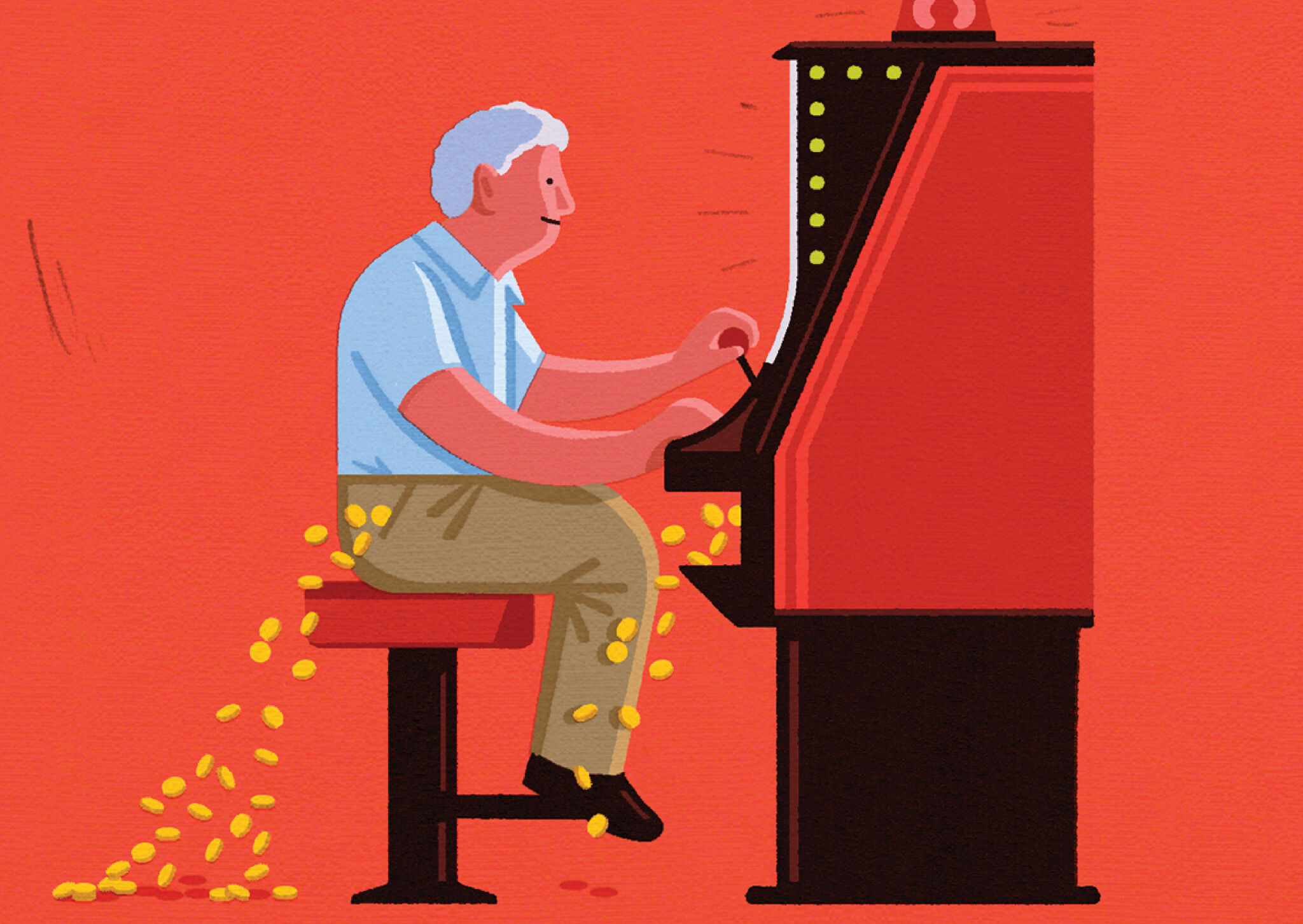
While online gambling is on the rise among older Americans, the demographic remains a desirable one for the more than 1,000 brick-and-mortar casinos spread across 42 states.
Many casinos have designed marketing campaigns to draw in older gamblers. They offer free bus rides from senior residences and community centers. Many promote their physical accessibility and offer complimentary use of wheelchairs and electric scooters. They also tout packages geared to older players, including slot play credits, meal vouchers and show tickets.
It’s common practice for hosts to chat up VIPs and get to know the details of their lives. They may follow up with birthday cards and free play credits, inviting customers to celebrate at the casino. Older people “are especially vulnerable to this, especially if they’re living alone or in social isolation,” says Brian Pempus, an industry analyst and founder of gamblingharm.org.
In 2019, Shannon Moran received a promotional mailing at her house in a small town outside of Dallas. The flyer offered about $200 in free play at a casino new to her. Moran, 57 at the time, had gambled in the past but never had a problem with it. “The promo enticed me to check it out,” she says. “That’s the first time I went overboard.”
When her mother passed away a year later, Moran inherited money to play with, but she would end up betting more than she’d intended. Those promotions kept coming, and she kept returning. Twice, she hit big—two $100,000 drawings in three months—but she poured those winnings back into the slots. Given her penchant for playing machines with $25 and higher spins, the casino granted her VIP status and showered her with gifts, from tickets to bathrobes. “Everything in my home—socks, pajamas, plates, blankets, jewelry, a TV—came from the casino,” she says.
The tactics proved effective. Three years later, Moran says, she had lost the $200,000 she’d won from the casino and over $200,000 of her own money. She sank into a depression accompanied by thoughts of suicide. “I thought I was gambling out of grief,” the retired hairdresser says. “I didn’t realize it could be an addiction.” After her losses, Moran started attending meetings of a 12-step program for people with gambling problems. She says she found gambling harder to quit than the 40-year smoking addiction she’d kicked. “It took over my life.” —J.R.